Beautiful Yamdrok Tso
Our trip to Everest Base Camp and back was done in a 4 wheel drive, most trips around Tibet require one. We joined up with another couple from Germany to share costs of the vehicle, driver and permits required. We booked our trip with the company associated with the Snowland Hotel. It’s pretty easy to get a trip booked to destinations within Tibet. People have posted notices all over town and in the hotels to state that they are looking for other people to share the cost of a driver and vehicle.
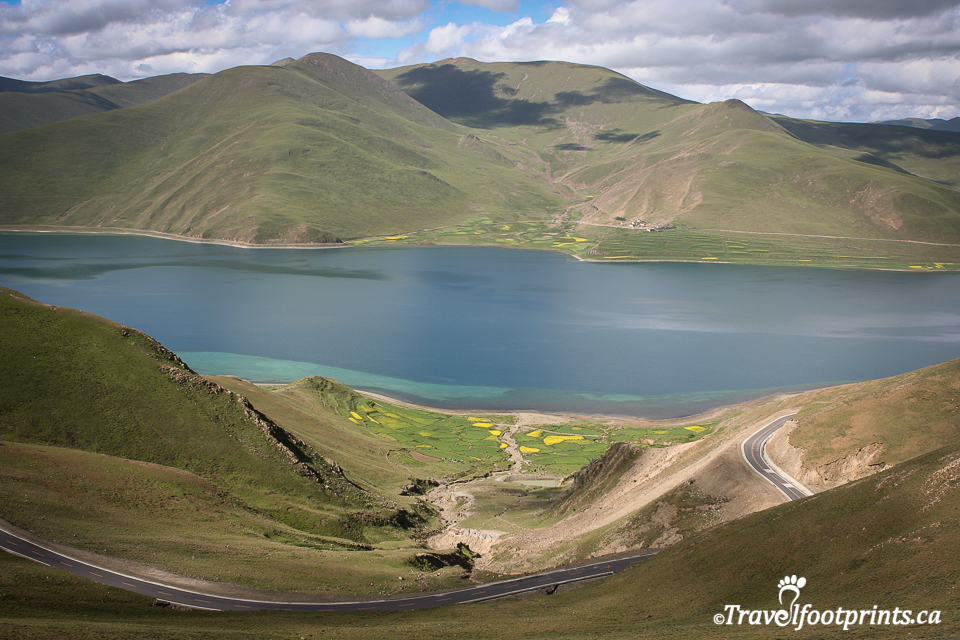
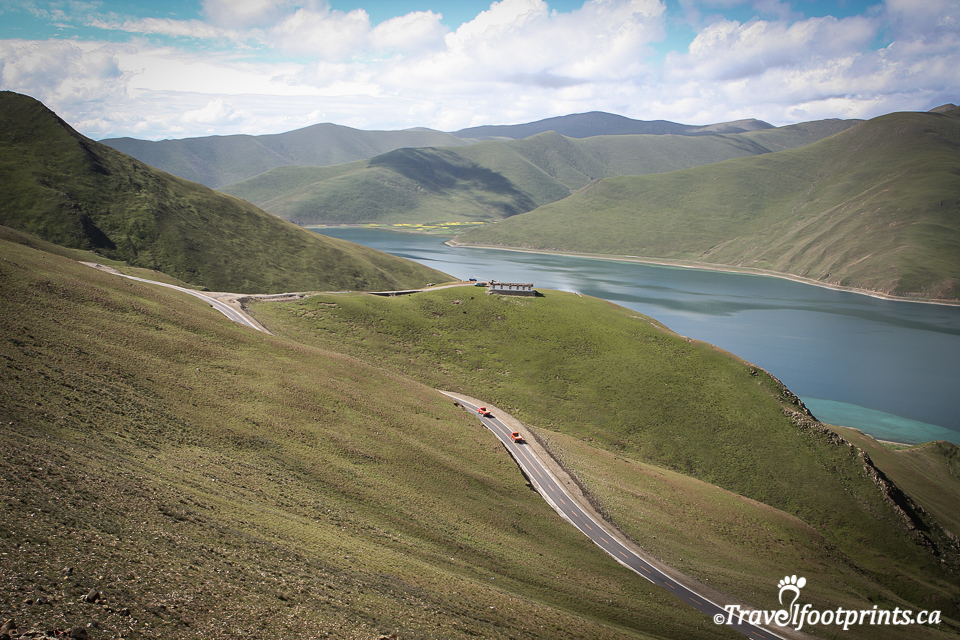
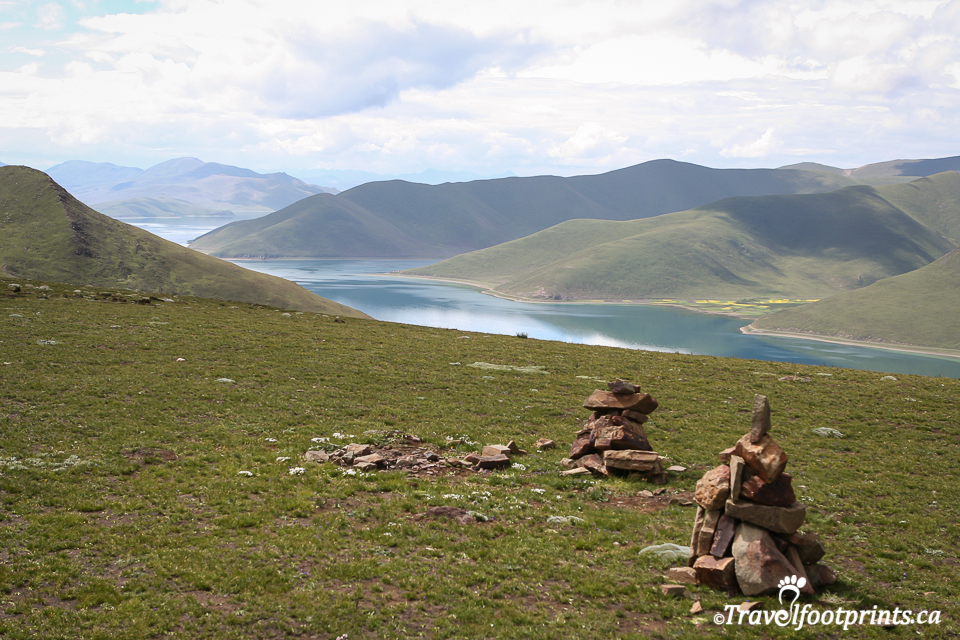
We left just shortly after 8am. We drove from Lhasa to Yamdrok Tso (Tso means lake). The lake is at an elevation of 4488m and the elevation of the summit pass called Kamba-la where we viewed it from was 4794m. The lake was a beautiful turquoise blue. It is a body of water with many arms shaped like a scorpion. It doubles back on itself on the western side creating a large island.
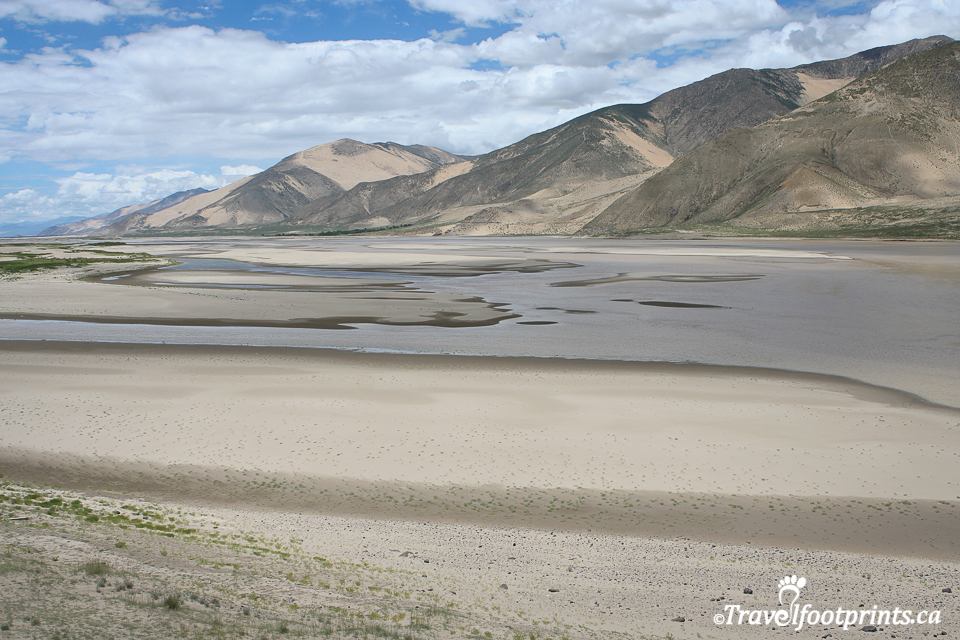
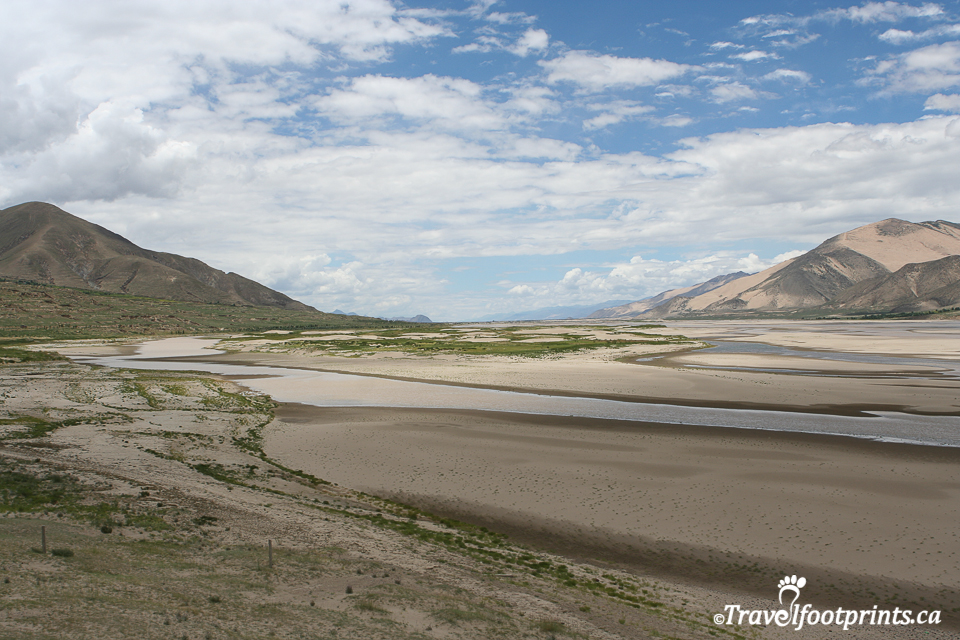
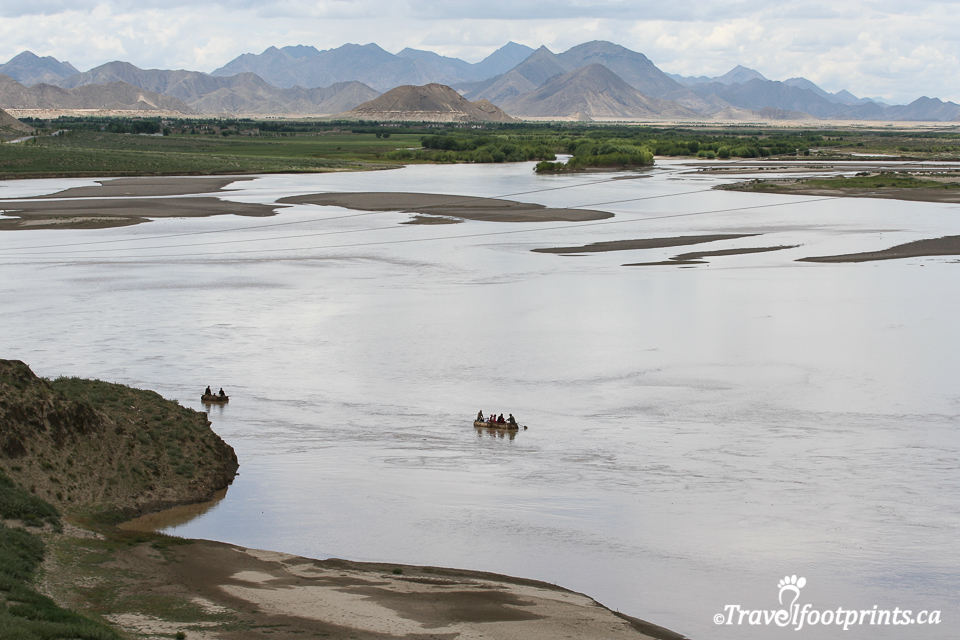
Yamdrok is one of the 4 holy lakes in Tibet. Devout Tibet pilgrims circle the lake in a walk lasting about 7 days. Unfortunately what is viewed as a sacred body of water by the people of Tibet is only seen as a natural resource waiting to be utilized by the Chinese. They have used gravity to create a hydro electric supply by dropping water 850 meters out of the lake to the river down below. The problem is that Yamdrok Lake is a dead body of water with no outlet and no perennial source of water. The water taken out can not be replaced naturally. Predictions are that it will be drained within 20 years. Noticeable drops in the water level are already apparent.
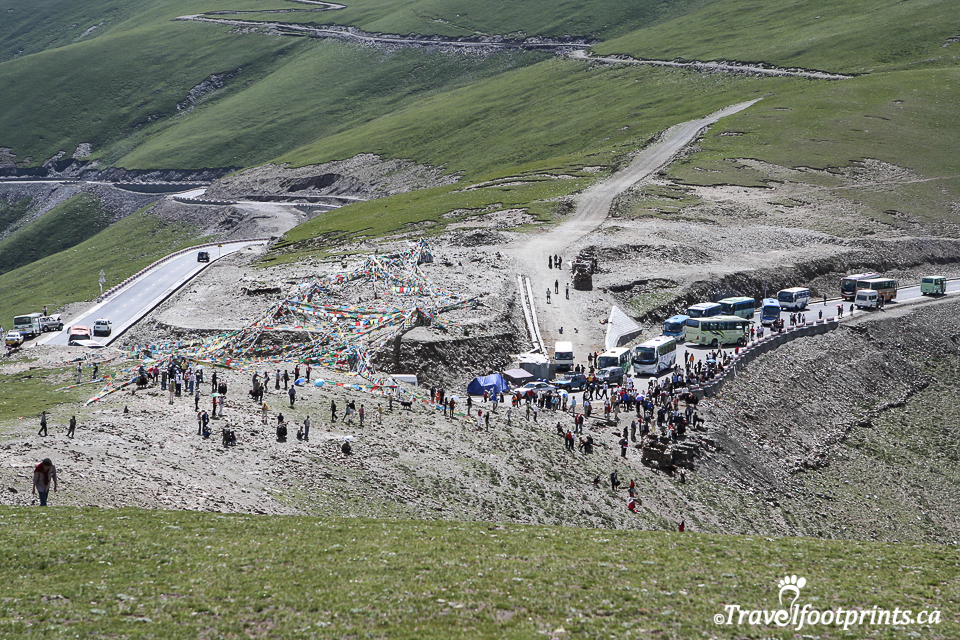
The area at the pass is unfortunately now loaded with Chinese tour buses. They are almost piled on top of one another creating a traffic jam. There were areas with tons of garbage littered around. We can not believe the mentality of the tourists here. Such an incredible place of nature they have come to view and they litter all over it.
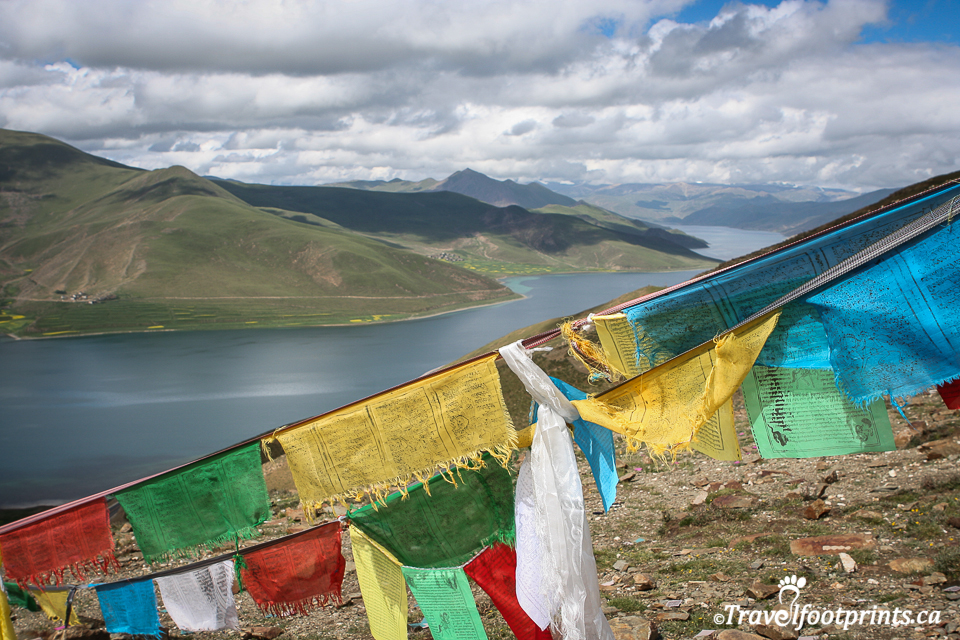
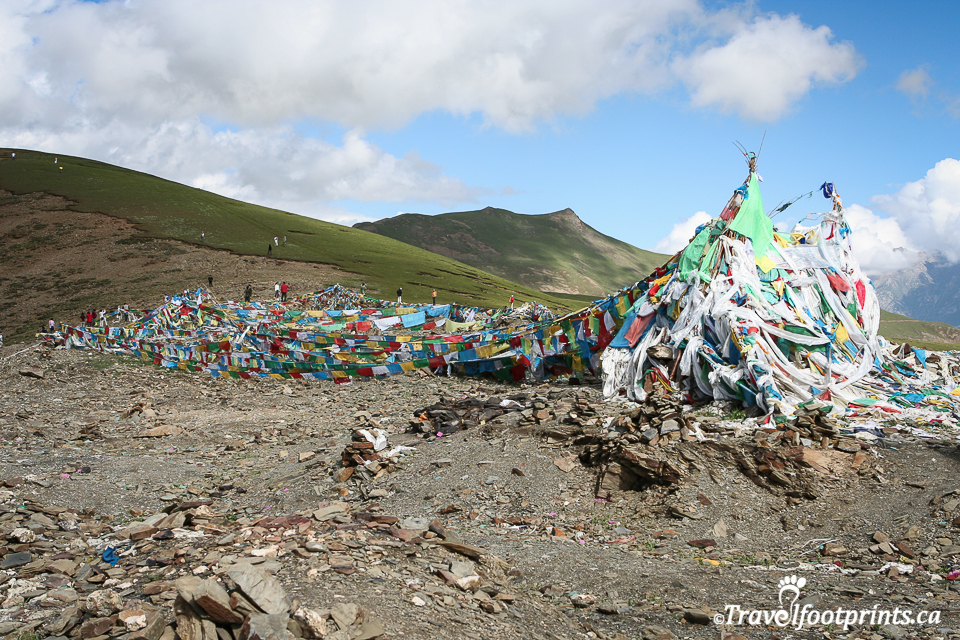
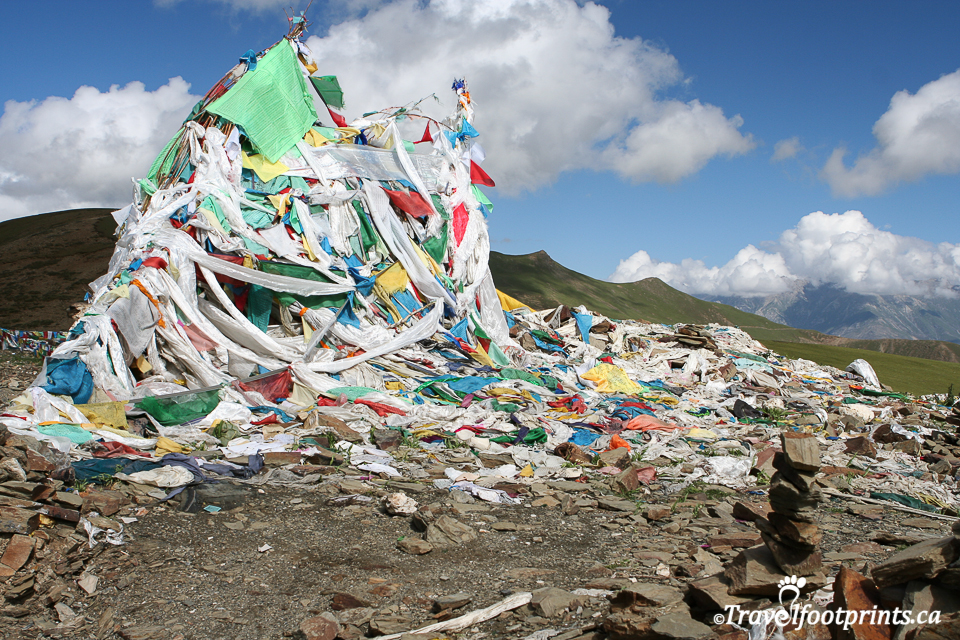
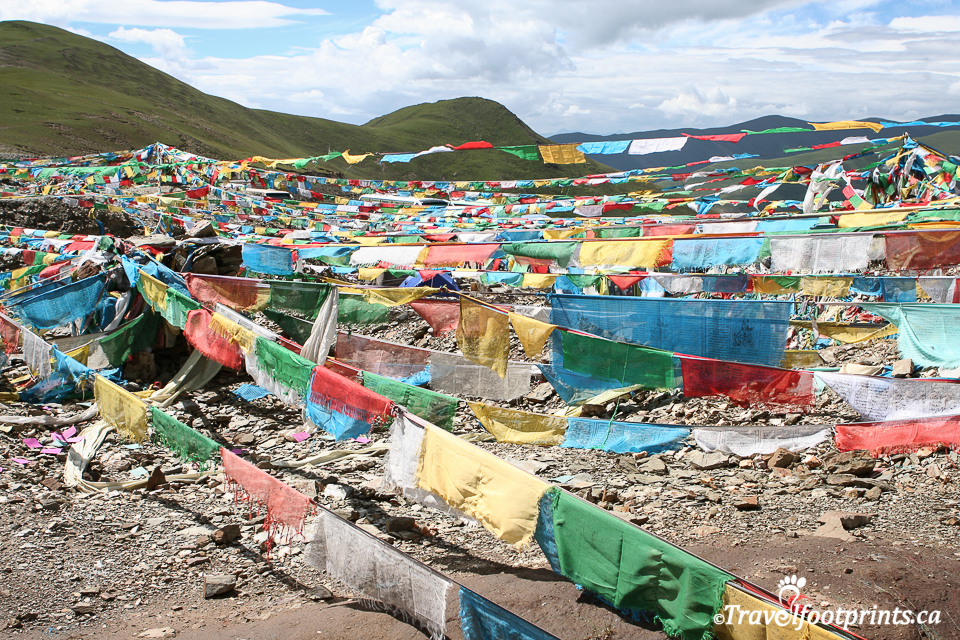
We decided to climb up even higher on a hill to get away from all the chaos. It was definitely taxing to breath at this elevation. You can normally drive around the lake, but the road is closed right now for construction. Surely the tour buses will ravage this area when it reopens as well. Chinese tourism is in full swing here and it won’t be long before every accessible area of Tibet has tour buses pouring into it. Ruining it as many places in China already are. We got some solitude up on the hill, we were passed by a herd of sheep and their Shepard. There were prayer flags all over the top of the peak.
Great Timing With Our Arrival In Gyantse
We drove back to the main road and onward to Gyantse. The driver turned off the road and into a vast dirt area with a Tibetan village. We could tell by the look on his face that he didn’t know where he was going. He stopped a few times to ask some locals where the way was to Gyanste. After running into dead ends we headed back to the main road. Our fears were correct, we had long passed the turn off to Gyantse. We kept heading down the road and drove all the way to the next town of Shigaste. Now we would have to back track down a different road from there to Gyanste. This was too bad as we had lost many hours of our time to explore the town when we arrived.
We had impeccable timing with our arrival at Gyanste, they were holding their annual Horse racing and archery festival. It is a week long event. This turned out to be a major highlight of our trip, certainly one of the best cultural experiences. We only saw the start of the festival and not the actual horse racing. We wish we could have stayed another night, but our trip to Everest was all planned out. We were upset that the tour company did not mention that we were going to be passing through Gyantse during the horse festival.
A Little History On Gyantse
Gyanste is a small town at an elevation of 3950m. It is located in the Nyong-chu Valley. The town dates back to the 14th century. At the time of the Chinese take over it was the 3rd largest town in Tibet. In the 15th century the town was a major trade center for wood and wool between India. Gyantse carpets were also considered the finest in Tibet.
In 1904 Gyantse was invaded by the British. This was known as the Younghusband expedition. Despite previous exposure to British firepower, the Tibetans had no idea what they were up against. 700 Tibetans were killed within 4 minutes. The British buried the dead and had set up a field hospital for the wounded. This dumbfounded the Tibetans. They could not figure out why the British were trying to kill them one day and then save their lives the next. Other battles went on as the British continued to make their way to Lhasa. Finally an agreement was signed allowing British trade missions at Gyantse and Gartok.This would allow trade between Tibet and British occupied India.
We arrived at Gyanste at about 6:30pm, much later than planned. The monastery that we wanted to see was already closed for the day. The monastery is called Pelkor Chode it was founded in 1418. It was once a complex of 15 monasteries that were brought together with three different orders of Tibetan Buddhism in one compound. A rare incidence of multi denominational tolerance. There is also a Dzong that looms over the town on a high ridge. It looks like a fairy tale castle.It is a 14th century fort that offers great views of the town and the Nyong-chu valley.
Exploring The Town
We decided to walk to the area where the horse festival was going to start the next morning. We sat at the top of a ring that would be used for some of the performances. It wasn’t long before two children were seated next to us. The boy spoke a little bit of English. The boy was curious to look at our Tibet travel book. We were told this book would create a lot of interest while we traveled. He looked at a few pictures in it with fascination. He wanted to know where the places were in Tibet. Soon we had a whole group of people around us. All of them wanted turns looking at the book.
It was getting late so we started to make our way back to the hotel. A very strong wind picked up suddenly and the dust came with it. It was flying into our faces. We had to try and cover our eyes with our hands and peek through while we made our way down the road. Then the thunder started, we could see locals scampering all over the place. We knew the rain was on its way. We managed to make it within 20 meters of our hotel before the rain started. It was coming down in sheets. We ducked into a small restaurant. We had to put a poncho onto Jack to save the camera backpack from getting drenched. I put up my umbrella, but it was of little help. We made a mad dash back to the hotel.
The Horse Festival Is Unlike Anything We Have Ever Seen
In the morning we started to walk to the Horse Festival grounds. Locals were heading there in droves. They were on foot and in horse drawn wagons. Many Chinese officials were arriving in brand new SUV’s, honking to try and push their way through the crowds. People were very friendly towards us as we walked along with them. We received many Tashi Delek’s (hellos) along the way. You could feel the excitement in the air. This is a really big event for the area.
The road leading up to the grounds was lined with vendors selling all kinds of stuff. The festival grounds had tents set up all over the place. There was a track that went around the outside of the entire area. People were already sitting up on the adjacent hillside ready to watch the activities. There was a center ring where many other performances were held as well. We made our way to the entrance gate. No one had to pay to get in except the small handful of foreigners who were attending. A couple of guys in front of us were arguing and complaining that they had to pay when no one else did. While they had everyone occupied we walked in completely unnoticed.
We made our way to the far end of the grounds. Dozens of people were lined up waiting to start a parade that would head into the main ring. It was the most incredible display of costumes and colours. Soon there were more groups gathering behind them, each with different costumes. The traditional outfits were beautiful and very unique. Then the men on horses came forward. The horses were adorned with decorations as well. The men had all kinds of bizarre head dresses and clothing on. Some people had some very scary looking masks. There were also groups of monks with the yellow curved hats, they look like horns on their heads. This all continued on for over an hour.
Unfortunately time flew by fast and we had to leave at noon so we could get to our next destination of the trip. We didn’t get to see any actual horse racing, but we were very glad to get a good taste of what the festival was all about. We had a few moments left to get inside the ring and see some dancing. Then the Chinese national anthem was played. You could see the look in the Tibetans faces, it made us sad to know how the people must be feeling. It should be the Tibetan flags being waved and their anthem being played. The tradition of these horse festivals had gone on long before the Chinese ever got here.


Our site features our travel experiences and photography from our independent world travels. In addition we have lots of useful travel tips and practical information to help you plan your next trip. Check back often as we continue to add new content.